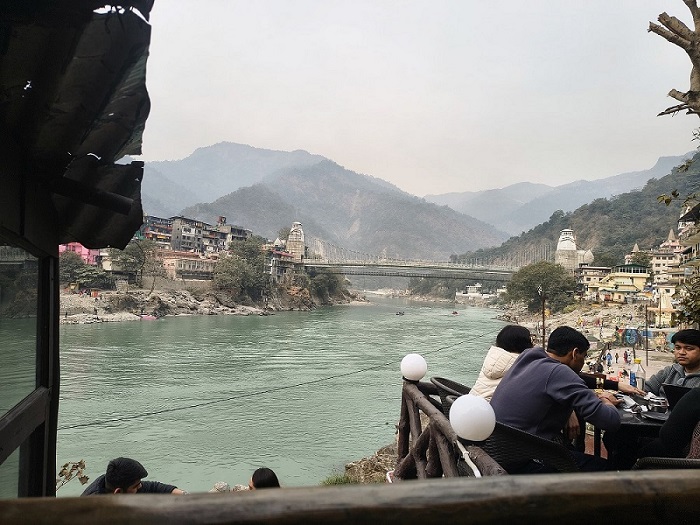
If you haven’t heard the name Rishikesh yet, you certainly will. In the last decade, this small city has transitioned from a quiet retreat for seekers into a global phenomenon. But I am not here to provide you with a sterile travel guide. I won’t give you a list of the “Top 10 Cafes” or a checklist of “Dos and Don’ts”. Those are everywhere.Instead, I want to talk about the spirit of the place. As a girl from the hills, my relationship with Rishikesh has been a slow, unfolding realisation—a journey from a distant window seat to the very edge of the Ganga’s cold, turquoise waters.
Table of Contents
The Transit Years: A Bird’s-Eye View of Rishikesh
My hometown is in Tehri Garhwal. Growing up in a Himalayan state, you would think Rishikesh was a backyard playground, but for many years, it was merely a phantom city. To me, Rishikesh was the “threshold”. It was the place that signalled we were almost out of the mountains or just beginning to climb them.
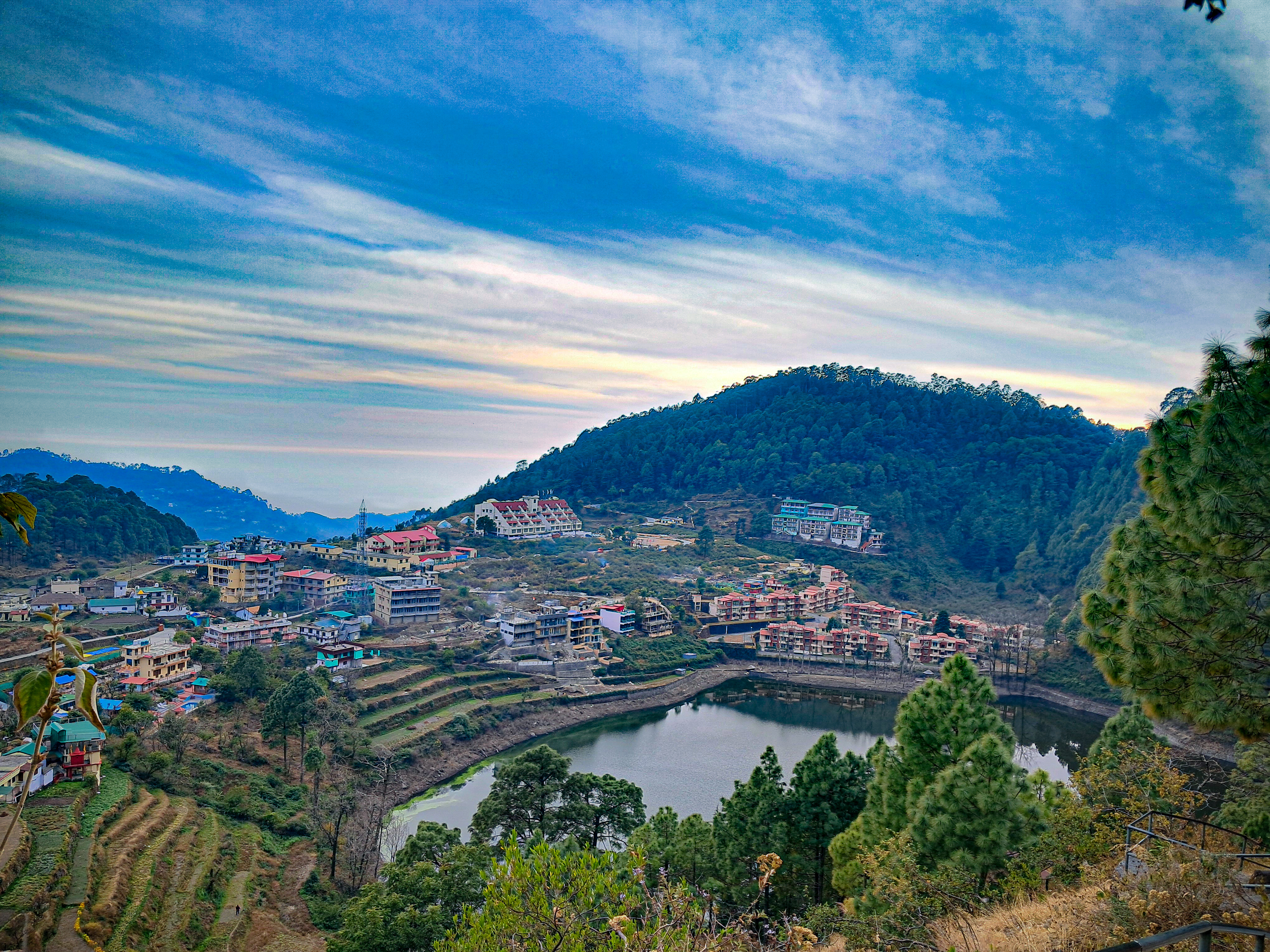
Whenever we travelled from Tehri to Dehradun (current city), we bypassed the heart of the city. However, there is a specific moment on that drive that stays etched in my memory. After descending the winding, mist-covered roads of Narendra Nagar, the mountain suddenly opens up. If you are sitting in the window seat, as I always was, you are gifted with a breathtaking bird’s-eye view.From that height, Rishikesh looks like a delicate tapestry woven around the silver thread of the Ganga. I used to wonder how a city could look so peaceful and so sprawling at the same time. We would descend until the air turned warmer, hit Natraj Chowk, and then pivot immediately toward the Dehradun road. For years, my interaction with this “Global Yoga Capital” was limited to that five-minute descent. I saw the city, but I never felt it.
The Scooty Chronicles
The transition from seeing to feeling happened because of my mother. My mother has an inexplicable, deep-rooted love for Rishikesh. At least once a year, she feels the “pull” of the city.
These days, our trips are much more intimate. It is often just the two of us. We pick up our scooty—the most authentic way to travel the hills—and we ride towards Rishikesh. There is a specific kind of freedom in a scooty journey. You feel the change in temperature on your skin; you smell the shift from forests to the damp, mossy scent of the riverbanks.When I once asked her, “Mummy, why do we keep coming back to Rishikesh? Why not somewhere new?” She gave me an answer that changed my perspective on spirituality entirely.
The Philosophy of Equality: The Non-Judgmental City, Rishikesh
She told me: “This city never judges you.”
Think about that for a moment. In our daily lives, we are constantly being measured. We are measured by our degrees, our job titles, our clothes, and our social standing. But my mother observed that when you stand on the banks of the Ganga, all of that evaporates.
“Whatever you have, whatever position you hold—here, everyone is the same in front of the Ganga,” she said.
We spend hours just sitting by the river. We don’t talk much. We don’t take “aesthetic” photos for the sake of it. We just sit. In that silence, you realise that the river doesn’t care if you are a billionaire or a pilgrim with nothing but a small cloth bag. The water flows the same way for both. This is the “raw beauty” I always talk about—the stripping away of the ego.
The Sacred Geography: A Convergence of Legends
To understand why Rishikesh feels the way it does, we have to look at its neighbours. Spiritual energy isn’t a modern marketing invention; it is a cumulative build-up of centuries of intent.
Rishikesh is flanked by two giants of history and mythology:
- Dehradun (Dronnagri): Named after Guru Dronacharya. In ancient times, this was the site of his ashram. Students from all over the subcontinent travelled here to learn the arts of war, philosophy, and science. The very air of this region was once dedicated to the pursuit of knowledge (we find these accounts in many of our holy scriptures).
- Haridwar: The capital of King Daksha, the father of Sati (Mahadev’s first wife). This is where the famous Daksha Yajna took place.
When a city is located between the seat of ancient knowledge (Dehradun) and the seat of ancient power and sacrifice (Haridwar), it naturally becomes a focal point for something deeper. Rishikesh became the bridge between the physical world and the spiritual ascent into the higher Himalayas.
The Tapasya of Raibhya Rishi
The name Rishikesh is not just a label; it is a formula for living. It comes from the Sanskrit words ‘Hrishika’ (meaning ‘senses’) and ‘Isha’ (meaning ‘lord’). Together, they translate to the “Lord of Senses”, which is a name for Lord Vishnu.
The legend tells us of Raibhya Rishi, a sage who performed intense tapasya (austerities) on these banks. He wanted to master his internal world. Pleased by his devotion, Vishnu appeared to him. In the Skanda Purana, the area is referred to as Kubjamraka because the Lord appeared specifically under a mango tree.
But why “Lord of Senses”? Because the ancients knew that the greatest battlefield isn’t outside—it’s inside us. The one who can control their senses is the most powerful person in the world. Rishikesh was the laboratory where sages tested this theory for thousands of years.
The Portal City: Energy vs. Tourism
Today, people come to Rishikesh for “adventure”. They come for white-water rafting, bungee jumping, and cafe-hopping. While there is nothing wrong with that, they often miss the “portal”.
Rishikesh is a portal city. Because of the thousands of yogis who have spent their life journeys here, every particle of sand and every drop of water carries a vibration. When you sit quietly by the river, you aren’t just sitting by H2O; you are sitting in a field of energy that has been cultivated since the beginning of time.Spirituality here isn’t about “leaving” the world. The name “Lord of Senses” suggests a balance. You don’t have to go to a cave to find God; you have to balance your senses so that you can find peace while living in the chaos. That is the real lesson of this city.
The Preservation of Aura: Why “We” are the Variable
However, I must be honest. With the influx of fame, the city is losing its aura. But the city isn’t changing—WE are changing it. We bring our noise, our plastic, and our frantic energy into a space that was meant for stillness. We change the definition of the city to fit our Instagram feeds.
But as I always say, it is up to us how we consume a place. I never suggest a specific ashram or a specific activity because the energy is everywhere. You don’t need a ticket to experience the “real” Rishikesh. You just need to arrive with the right intent.
Whether you are looking at the city from the window seat of a bus coming down from Narendra Nagar or you are sitting on the cold stones of a hidden ghat with your mother, the energy is there. It is waiting for you to perceive it.
I hope this gives you a glimpse into the version of Rishikesh that isn’t in the brochures. The version that belongs to the hills, the history, and the quiet moments of the soul.
With love from the mountains,
Shristi
(Your girl from the hills)


Leave a Reply