Table of Content

About Nainital
Nainital is a beautiful hill station in northern India, located in the Kumaon region of Uttarakhand. It is famous for its eye-shaped lake, covers around 120 acres and surrounded by seven protective hills. Mythology says that Goddess Durga’s (Sati’s) eye fell in this place, creating the lake and the Naina Devi Temple on its edge, which is believed to be partially submerged in the water. Geologists, however, once debated whether Naini Lake was a glacial (himani) wonder formed thousands of years ago by slowly moving ice or the result of powerful tectonic movements. Whichever history you choose to believe, these emerald waters remain the beating heart of Kumaon.
Nainital has a completely unique energy—colonial-era architecture, mountain air sweeping off the water, and a lively, bustling atmosphere. The beauty of Nainital can be experienced and cherished in every season throughout the year, with each season bringing its own distinct charm to the hills.
Where is Nainital?
Nainital is located in the Kumaon division of Uttarakhand state, India at an elevation of roughly 2,084 metres (6,837 feet) above mean sea level, situated in a valley surrounded by seven prominent mountain peaks, locally known as the Sapta-Shring. It lies approximately 30 km from Kathgodam (the nearest railway gateway) and around 60 km from Pantnagar Airport.
Why is Nainital Famous?
Nainital is well known for its serene lake, cool summers, and winter weather that attracts travellers all through the year. The town revolves around the famous Naini Lake, bordered by the lively Mall Road, historic British-era heritage, and the sacred Naina Devi Temple at the northern shore. It is also celebrated as the cultural heart of Kumaon, rich in regional food, folk traditions, and historic bazaars like Bara Bazaar and Bhotia Market. One of the most famous aspects of Nainital is the Nanda Ashtami Fair at the Naina Devi Temple, alongside the grand pandals set up during Sharad Navratri in October, when the entire Mall Road is decorated and the Nanda-Sunanda doli is carried in procession by locals on the final day. Nainital is not just a hill station but a true heritage of the Kumaoni people.
Nainital and the Kumaon Region
Beyond its scenic lake and colonial heritage, Nainital represents an important part of Kumaoni culture and heritage, where the traditions, faith, food, and everyday life of the region remain closely connected with the town.
History of Nainital
Nainital holds deep mythological roots as one of the 51 Shakti Peethas, where the eye (Naina) of Goddess Sati is believed to have fallen, creating the sacred lake.
Historically part of the realm of the Chand dynasty, Nainital was brought into the sphere of British colonial development in 1841 by British sugar merchant P. Barron. The town soon developed into an important British hill station and later became the summer capital of the United Provinces, drawing administrators and visitors to the cooler climate of the Kumaon Himalayas.
Today, it stands as a cherished cultural and travel hub in the Kumaon Himalayas.
Nainital Weather and Temperature
Nainital has a cool mountain climate, with pleasant summers, a rainy monsoon season, and cold winters. The weather can change quickly because of its elevation, so temperatures are generally lower than in the plains of Uttarakhand.
The best time to visit Nainital depends on what you want to experience. Summer is popular for escaping the heat of the plains, autumn offers clearer mountain views, while winter attracts travellers interested in the cold-weather atmosphere and the possibility of snowfall.
Nainital Weather Throughout the Year
- March-June: The best time to visit is during this period. Temperatures range from 10°C to 25°C (50°F to 77°F) providing pleasant and comfortable weather for outdoor activities like sightseeing and boating. Rainfall is generally less intense compared to other times of the year.
- July-September: The weather can be warm and sunny, with average temperatures around 20°C – 28°C (68°F – 82°F). Humidity might increase.
- October-November: Autumn brings the best weather. Temperatures cool slightly, ranging from 12°C to 20°C (54°F to 68°F). The hills are lush and vibrant.
- December-January: The weather becomes cooler, with daytime temperatures often dropping to 8°C – 12°C (46°F – 54°F). Snow is rare but possible, especially in the higher altitudes surrounding the town.
Nainital Weather in Summer
June-July: Summer in Nainital is warm (20°C – 28°C / 68°F – 82°F), with little rainfall. It’s a perfect time for water activities like boating on Naini Lake.
Nainital Weather in Winter
November-March: Winter is relatively mild with average temperatures around 8°C – 12°C (46°F – 54°F). Expect occasional rain.
Does It Snow in Nainital?
Yes, it can snow in the higher parts of the Kumaon region, including near Nainital. It’s more prevalent in December and January.
Best Places to Visit in Nainital
Naini Lake

Naini Lake is the central heart of the town. Taking a traditional wooden rowboat across the lake gives you a peaceful escape, where the gentle sound of oars and the cool lake breeze let you experience Nainital from its best angle. This town felt not less than any international town; the vibe is totally different and calm here.
Naina Devi Temple

Located at the northern edge (Mallital) of Naini Lake, this sacred temple is dedicated to Goddess Naina Devi. It holds deep spiritual importance for locals and visitors alike, offering a serene atmosphere right by the water’s edge. You can find many fishes in the lake just below the temple reeling; here no one kills these fishes. The government fisheries department CICFR (Bhimtal) also help to check the water and these fishes time to time.
Mall Road

Running parallel to the lake, Mall Road connects Tallital (the lower end) to Mallital (the upper end). It is the liveliest stretch in town, perfect for an evening walk, browsing handcrafted candles (a famous souvenir of Nanital) and enjoying local snacks.
Snow View Point
Accessible via a scenic aerial ropeway from Mallital, Snow View Point offers stunning vantage views of Nanda Devi, Trishul, and Nanda Kot peaks on clear days.
Tiffin Top (Dorothy’s Seat)
Located on Ayarpatta Hill, Tiffin Top provides a 360-degree view of Nainital town and the surrounding Kumaoni countryside. It is a favourite spot for morning hikes and quiet picnics under the trees. I took this hike during evening hours around 4pm, and it was worth it. There are many eating options also available in the top.
Eco Cave Gardens
The Eco Cave Garden is located in malli taal area of Nainital on the kaladungi Road. It features a series of natural rocky caves shaped around different animal habitats, including the Tiger, Panther, Bat, Apes and Flying Fox Caves.
The garden also has hanging gardens and a musical fountain, while traditional lamps add to its charm. Exploring the narrow caves offers a fun and educational experience, especially for children, while showcasing the wildlife and natural character of the Kumaon region.
Nainital Zoo
The Nainital Zoo, officially known as the Pt. Govind Ballabh Pant High Altitude Zoo, is one of the popular attractions in Nainital, Uttarakhand. Located on Sher Ka Danda hill, the zoo is spread across approximately 4.6 hectares of green hillside. Best for the Family and visitors to see the wildlife here.
Land’s End

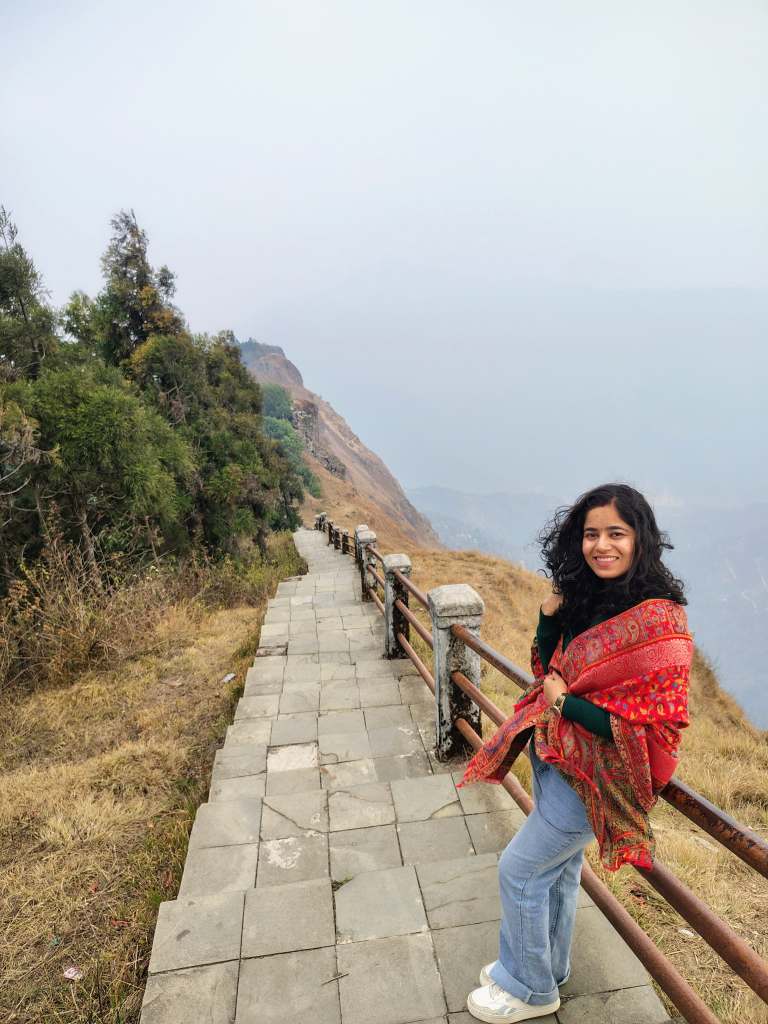
Land’s End is one of most liked viewpoints, known for its eye-cathcher landscape and Bird-eye Views of the surrounding Himalayan hills. It is Located on the outskirts of the town, the viewpoint sits above a steep drop, creating a sense of standing at the edge of cliff—hence the name Land’s End.
The Khurpatal valley and the forested hills, making it a popular spot for travellers looking to experience Nainital beyond the busy Mall Road and Naini Lake. The surrounding landscape also reflects the geological forces and erosion that have shaped the Kumaon Himalayas over time.
There are 7 lakes in Nainital to read about it click here.
Hanuman Garhi
Hanuman Garhi temple sitting at 6,401 feet and 3.5 kms away from talli taal. This temple is associated with Neem karoli Baba . The sunrise and sunset at this hilltop make it more special including the temple dedicated to shitala mata and Hanuman.
Governor’s House (Raj Bhawan)

Built in the Victorian Gothic style, this historic governor’s estate resembles Buckingham Palace. Spanning expansive grounds with a golf course and pine forest trails, it offers a look into the town’s colonial history. Though there are many guidelines, also when you visit Governor House, it is off-courtesy due to the security region. Must take cash with you because you can find the network issue for online payment. You can visit this place on an hourly basis; for example, if you reach here around 11:30, you have to wait till 12 for entry, then the whole batch gets entry with the inside guide. For the next batch you have to wait till 1.00. This building gives a pure Scottish feeling, like you are somewhere in scotland.
Things to Do in Nainital
- Go for the Boating
- Walk Along Mall Road, Malli taal and Talli Taal and feel the lake.
- Hike to Tiffin Top or Naina Peak
- Explore Nainital’s Viewpoints
- Visit the Temples and Cultural Sites
- Explore Nature and Wildlife
- Ride the Nainital Ropeway
How to Reach Nainital
Delhi to Nainital Distance
Almost 300kms by road
Kathgodam to Nainital
Around 34-42kms by road
Haldwani to Nainital
Around 40-44kms by road
Dehradun to Nainital
Around 287-290kms by road
Haridwar to Nainital
Almost 235-242kms by road
Nearest Railway Station to Nainital
kathgodam Railway station around 35kms from Nainital.
Nearest Airport to Nainital
Pantnagar Airport, Which is almost 70kms away from Nainital.
Best Time to Visit Nainital
Nainital can be visited throughout the year, with each season offering a different experience. Summer brings pleasant weather, monsoon makes the hills greener and misty, autumn offers clearer mountain views, while winter brings cold weather and the possibility of snowfall.
Places to Visit Near Nainital
Kainchi Dham

Kainchi Dham is a Hanuman temple and ashram founded by Neem Karoli Baba in 1962. It is located between two hills that cut and cross each other to create a shape of a scissors so it is called Kanchi Dham. The devotees travel all around the world to visit this Temple.
Bhimtal

Around 22 km from Nainital, Bhimtal is a larger, quieter lake town centred around a lake with a central island aquarium. It offers a more relaxed, slow-paced atmosphere. Unlike Nainital this place is less touristy and closer to authentic Kumaoni households
Sattal

Located near Bhimtal, Sattal is an interconnected group of seven freshwater lakes set amidst dense oak and pine forests. It is an untouched paradise for birdwatchers and nature walks.
Naukuchiyatal

Famous as the “lake of nine corners”, Naukuchiatal is located around 26 km from Nainital. Known for its peaceful surroundings, kayaking, and paragliding, it is ideal for those seeking outdoor quiet. This is one of my favourite lakes in the Nainital district. You can do kayaking here.
Pangot & Kilbury
Situated about 15 km above Nainital, Pangot is a quiet mountain hamlet nestled inside the Kilbury bird sanctuary, ideal for spoting Himalayan wildlife and peaceful forest stays.
Mukteshwar
It is one of the emerging hill station for the tourist in the district of Nainital, Uttarakhand. It is well known for its himalayan peak views, orchards and for the Shiva temple on which the place name was given. The distance from Nainital is almost 48-50kms.
Jim Corbett National Park
Jim Corbett National Park is one of Uttarakhand’s best-known wildlife destinations and is located in the Nainital and Pauri Garhwal districts. It is famous for its Bengal tiger population, diverse wildlife, forests and river landscapes.
Which is better, Nainital or Mussoorie?
Both offer unique hill-station experiences. Nainital is centred around its serene lake, green valleys, and Kumaoni heritage, while Mussoorie is known for its wide ridge views across the Doon Valley, colonial architecture, and proximity to Landour in Garhwal.
Final Thought
Nainital is much more than just a famous lake destination. Its character has been shaped across centuries—from ancient sacred roots to its colonial heritage and the lived rhythms of Kumaoni mountain culture. Every surrounding peak carries its own quiet identity, and the town shifts beautifully as morning mist clears over the water into evening lights reflecting on the lake.
When you spend a few extra days exploring beyond the busy lakeside roads—walking up into the oak forests of Ayarpatta, sitting by the quieter corners of the surrounding lakes, or sampling traditional flavours in the old markets—you discover the authentic heart of Kumaon that keeps people coming back.
Also, for more stories and information do subscribe Uttarakhandpedia.
Delhi to Nainital Distance?
Almost 300kms by road
Dehradun to Nainital?
Around 287-290kms by road
Nearest Railway Station to Nainital?
kathgodam Railway station around 35kms from Nainital.
Nearest Airport to Nainital?
Pantnagar Airport, Which is almost 70kms away from Nainital.
Why is Nainital famous for?
It is famous for lakes which is the natural formed. Mountains with the lakes which is eye shaped freshwater lake.