Table of Content
The Hanol Temple: A Monument to Himalayan Engineering and Spirituality
Uttarakhand is broadly divided into the two major regions of Garhwal and Kumaon. It is also home to the distinct cultural region of Jaunsar-Bawar, known for its unique traditions, customs, language, architecture and way of life. There is a fascinating history and significance of the Hanol Temple named Mahasu Temple. A remarkable landmark within Jaunsar-Bawar region of Uttarakhand. It’s more than just a place of worship; it represents a powerful blend of ancient architectural techniques and deep cultural heritage.
The Architectural Wonders of Hanol

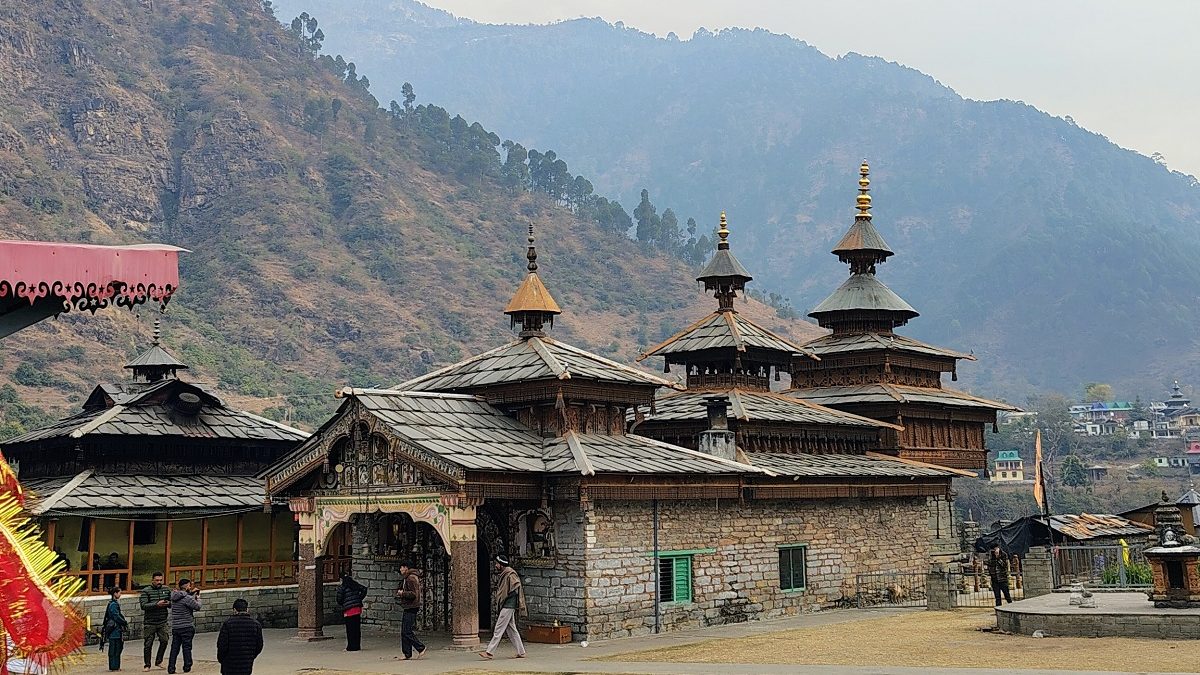
The Hanol Temple stands as a prime example of indigenous Himalayan engineering in Dehradun District in Uttarakhand. This Hanol Temple showcases the skillful application of Kath-Kuni timber bonding – a unique method developed over centuries. This technique allows for incredibly strong, flexible structures capable of withstanding significant seismic activity.
- Nagara Stone Work: A cornerstone of the temple’s design is the use of Nagara stone work, characterized by its layered stone assemblies that create a sense of solidity and permanence.
- Kath-Kuni Timber Bonding: Complementing the Nagara system, Kath-Kuni timber bonding – another ancient technique – was employed to build the temple’s intricate structure. This method utilizes overlapping wooden beams laid horizontally without mortar, resulting in a remarkably resilient and durable building.
A Spiritual Heartbeat: The Significance of Hanol
The Hanol Temple is deeply filled with the spiritual life of Jaunsar-Bawar. It’s not merely a place to worship; it serves as a focal point for religious ceremonies, including the annual Jagda Festival – a vibrant nighttime vigil dedicated to Mahasu Devta.
- The Sacred Stone Pillars: A particularly striking feature is the presence of two massive stones—the “Playing Balls of Bhim”— believed to have been used in ancient Hindu festivals as balls. Their presence connects the temple to the region’s rich mythology and traditions.
- The Temple Court: The temple courtyard serves a crucial purpose, designed to allow sunlight penetration and create a serene atmosphere conducive to spiritual contemplation.
Mahasu Devta Temple
The Four Brothers of Mahasu Devta
High up in the rugged folds of the Western Himalayas, where the swift, emerald waters of the Tons River cut deep gorges through ancient mountains, the rules of governance and devotion change. Here, in the culturally distinct belt of Jaunsar-Bawar in the Dehradun district of Uttarakhand—extending into neighbouring pockets of Himachal Pradesh and historical Kashmir connections—justice is not sought in conventional courtrooms. It is sought at the doorstep of Mahasu Devta.
Revered by the local villagers as an incarnation of Lord Shiva, Mahasu Devta is not a single entity but four divine brothers who rule over the spiritual and social lives of these highland communities: Botha Mahasu, Vasik Mahasu, Pavasik Mahasu, and Chalda Mahasu. To understand Jaunsar-Bawar is to understand the absolute sovereignty of these four deities, whose legends, architecture, and festivals form the beating heart of the valley.
Mahasu Devta History
The Sacred Genesis: From Kashmir to the Banks of the Tons

The legend of how the four Mahasu brothers arrived in the Yamuna and Tons valleys is a story passed down through generations of oral storytelling, intertwined with the historical transhumance of highland shepherds.
The Demon Story of Kalsi Valley: Hanol
Long ago, the valley surrounding Kalsi, near the confluence of the Yamuna and Tons rivers, was terrorised by a formidable, man-eating demon named Kirbir (or Kirmir). The giant’s terror was so absolute that villagers stopped stepping outside their homes, even in broad daylight. Fields lay fallow, and a heavy cloud of fear settled over the entire region.
Desperate for relief, a devout local Brahmin or priest turned to deep prayer and ascetic penance, pleading with Lord Shiva to intervene. Lord Shiva heard his prayers and appeared in a vision, directing the priest to travel northwest toward Kashmir to seek divine intervention.
The Highland Shepherds and the Divine Aid
During this era, the lower plains of Kalsi served as winter grazing grounds for migratory highland shepherds hailing from northern Himachal and regions extending toward Kashmir. When heavy snows blanketed the upper Himalayan passes, these pastoralists descended into the milder valleys with their flocks, establishing seasonal routes that connected distant alpine regions.
Following the divine command, the priest journeyed north. In response to the plea for help, four divine brothers—the Mahasu brothers—were dispatched to the region along with their mother, Deolar, and divine attendants. Upon reaching the valley, the brothers fought and slew the man-eating demon, liberating the people of Kalsi and the surrounding highlands.
Having saved the land, the four divine brothers chose to stay permanently, distributing the territory among themselves to protect, govern, and maintain righteousness (Dharma) across the hill state.
The Divine Hierarchy: The Four Brothers and Their Seats
Each of the four brothers occupies a specific role and geographical seat within the cultural landscape of the region.
1. Botha Mahasu (The Elder Sovereign)
- Status: Senior-most brother and central deity.
- Primary Seat: The main Mahasu Devta Temple at Hanol, situated on the eastern bank of the Tons River along the Tyuni-Mori road in Dehradun district.
- Nature: Botha Mahasu occupies the fixed, permanent throne. Unlike his youngest brother, he does not travel; he resides constantly at the main shrine in Hanol, presiding over matters of supreme justice and divine court.
2. Vasik Mahasu & 3. Pavasik Mahasu

- Status: The middle divine brothers.
- Primary Seats: Shrines adjacent to the main complex in Hanol, alongside regional seats such as Bisoi (near Nagthat in Chakrata), Thaina, Lakhwar, and Lakhamandal.
- Nature: They manage localised territorial jurisdictions, overseeing regional agrarian life, family disputes, and village protection.
4. Chalda Mahasu (The Nomadic Ruler)
- Status: The youngest brother (“Chalda” translating to “the moving or dynamic one”).
- Primary Seat: Unbound by a single permanent temple.
- Nature: Chalda Mahasu moves perpetually across a designated territory spanning Jaunsar-Bawar, Uttarkashi, and parts of Sirmaur and Shimla districts in Himachal Pradesh. He travels in a grand, ornate ceremonial palanquin (doli), accompanied by hundreds of devotees, traditional musicians, and temple attendants.
Recent Movement: In a historic ritual procession in December 2025, Chalda Mahasu crossed the Tons River, moving his holy stay from Uttarakhand into Sirmaur district, Himachal Pradesh, where he resides for an extended period among his regional devotees before continuing his perpetual pilgrimage.
The Rhythms of Worship: The Jagda Festival and Local Traditions
The spiritual life of Jaunsar-Bawar reaches its peak during the grand annual festival known as Jagda (or Jagra), a night-long vigil dedicated to Mahasu Devta.
Core Elements of Mahasu Jagda
- Timing: Celebrated annually during the Hindu lunar month of Bhadon (typically late August or early September).
- The Sacred Bath: The ceremonial image (utsav murti) or holy staff of the deity is brought out from the inner sanctum and taken down to the swift currents of the Tons River for a ritual bath, accompanied by the ringing of brass bells and blowing of traditional horns (Ransingha).
- The Procession: The deity is carried through the village in a lavishly decorated, silk-clad doli.
- The All-Night Vigil: Devotees gather in thousands in the temple courtyard. Throughout the night, torchlights illuminate the stone facades while local musicians play ancient instruments like the Dhol, Damau, and Thali. The community sings Harul—traditional narrative folk songs recounting the history, legends, and heroic deeds of Mahasu Devta.
Local Jagdas and the Mystery of the Vultures

Beyond the grand central Jagda at Hanol, smaller local jagdas take place at regional shrines in villages like Thaina, Bisoi, Lakhwar, and Lakhamandal.
An intriguing natural phenomenon observed near Hanol during these sacred gatherings is the presence of unusually large Himalayan Griffon vultures soaring high above the temple cliffs. While non-locals view their presence through an ecological lens—attributing it to the rugged terrain, steep river gorges, and thermal updrafts of the Tons basin—locals hold a deeper, spiritual perspective. To the inhabitants of Jaunsar-Bawar, these magnificent birds are the living magic and divine messengers of Maharaj Mahasu, maintaining an ancient watch over his sacred realm.
Cultural Identity of Jaunsar-Bawar
The region of Jaunsar-Bawar stands distinct from the adjoining Garhwal and Kumaon cultural zones of Uttarakhand.
- Distinctive Attire: Men traditionally wear the Digwa (a woollen cap) and long woollen coats called Chola or Tholma, designed to handle cold mountain winds. Women wear brightly patterned headscarves (Dhatu) paired with flared long skirts (Ghagra) and embroidered jackets.
- Dialect and Folklore: The native Jaunsari dialect preserves archaic linguistic roots, rich with oral ballads, folk tales, and distinct song forms like Harul and Tandi.
- Terrain and Way of Life: Framed by dense pine and deodar forests, terraced fields, and dramatic river valleys, the landscape reflects a harmonious blend of nature, tribal custom, and unwavering faith. Here, Mahasu Devta remains not just a deity of the past but the living ruler, protector, and supreme judge of the highlands today.
My Experience Travelling to Hanol
While visiting this temple in Hanol, located around 151 km from Mussoorie and 192 km from Dehradun, I found the journey itself to be as memorable as the destination.
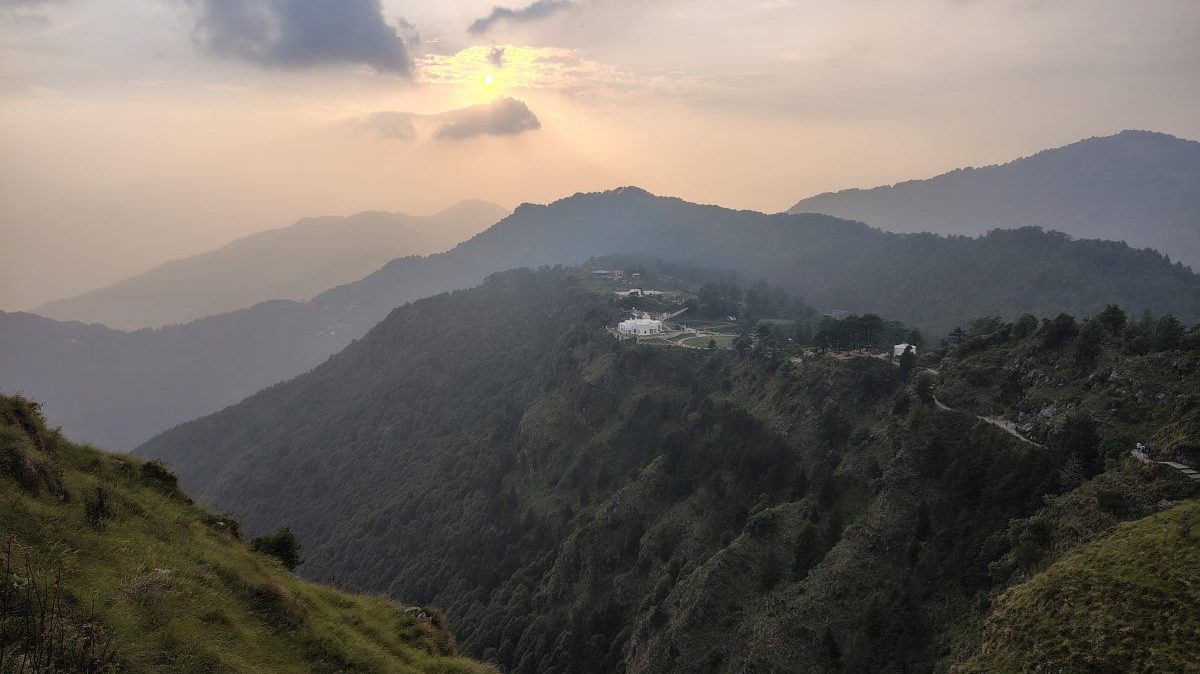
The road from Mussoorie to Hanol takes you through a remarkably different geography, with changing landscapes, winding mountain roads and quiet valleys unfolding along the way. The peaceful surroundings, majestic mountains and small villages scattered along the route make the journey feel truly special.
Travelling to places like Hanol almost feels like a blessing. Beyond visiting a temple, it gives you an opportunity to experience the local culture, discover age-old traditions and understand the simple way of life of people living in the mountains. These journeys offer a glimpse of Uttarakhand that goes far beyond the usual tourist destinations.
Understanding Uttarakhand
At Uttarakhandpedia, our aim is to showcase Uttarakhand beyond its popular tourist destinations. We want to share the state’s history, culture, traditions, spirituality, food, people, and the landscapes that make it unique, while bringing lesser-known stories and places to a wider audience. Through Uttarakhandpedia, we hope to help people discover, understand, and appreciate the many layers of Uttarakhand and its rich Himalayan heritage.
1. About Mahasu Devta & the Temple
Q: What exactly is Mahasu Devta?
Mahsu Devta is a Hindu deity revered in the Hanol area of Uttarakhand, India. He’s considered a guardian of the land and associated with prosperity, good fortune, and protection. He’s revered as the founder of the Hanol area.
Q: Why is Mahsu Devta temple in Hanol?
It’s believed the temple is dedicated to Mahasu Devi, and after Huna Bhatt, it came to be known as Hanol. Its association with prosperity makes it a significant place for locals and visitors.
2. About the Temple & Its Significance
Q: Is the Mahsu Devta Temple Open to the Public?
Yes, the temple is open to the public! It’s a cherished local site.
Where is the Mahsu Devta Temple located?
he temple is situated in Hanol, a relatively remote village in the Dehradun district of Uttarakhand, India.
Why is the temple located in Hanol?
t’s believed to be dedicated to Mahasu Devi, and after Huna Bhatt, it came to be known as Hanol. Its association with prosperity makes it a significant place for locals and visitors.
3. About Mahasu Devta & History
Who was Mahasu Devi?
Mahasu Devi was a Hindu goddess revered in the Hanol area of Uttarakhand, India. She is known as the mother of the Hanol people and the protector of the land.
What is the significance of the Hanol area?
The Hanol area has a rich history, connecting to the Hindu tradition. It’s a special place for locals and visitors to honor the goddess.
4. Interesting Facts
What is the history surrounding Mahsu Devta?
The temple is dedicated to Mahsu Devi, and after Huna Bhatt, it came to be known as Hanol. Its association with prosperity makes it a significant place for locals and visitors.



Leave a Reply